




Work With Us
Use your skills to craft digital solutions. Together, we can work alongside nonprofit organizations and create a meaningful impact.
Students
Are you passionate about software and social impact? Are you looking to join a unique and close-knit community? Join Us!
Our mission provides a distinct experience to develop technical skills and interact with nonprofit clients all while applying your skills to impact real lives.


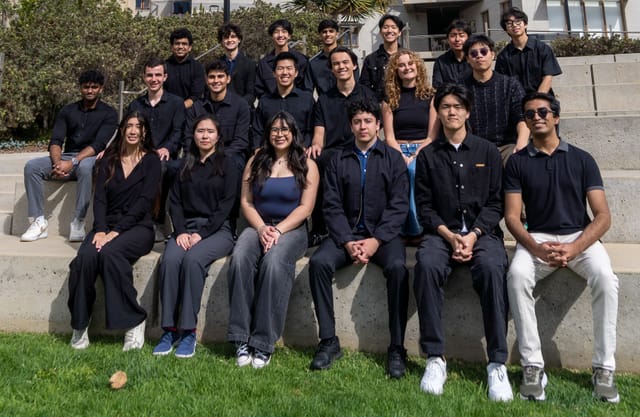
Developers
Interested in developing products for social good? Apply to TSE's development team!

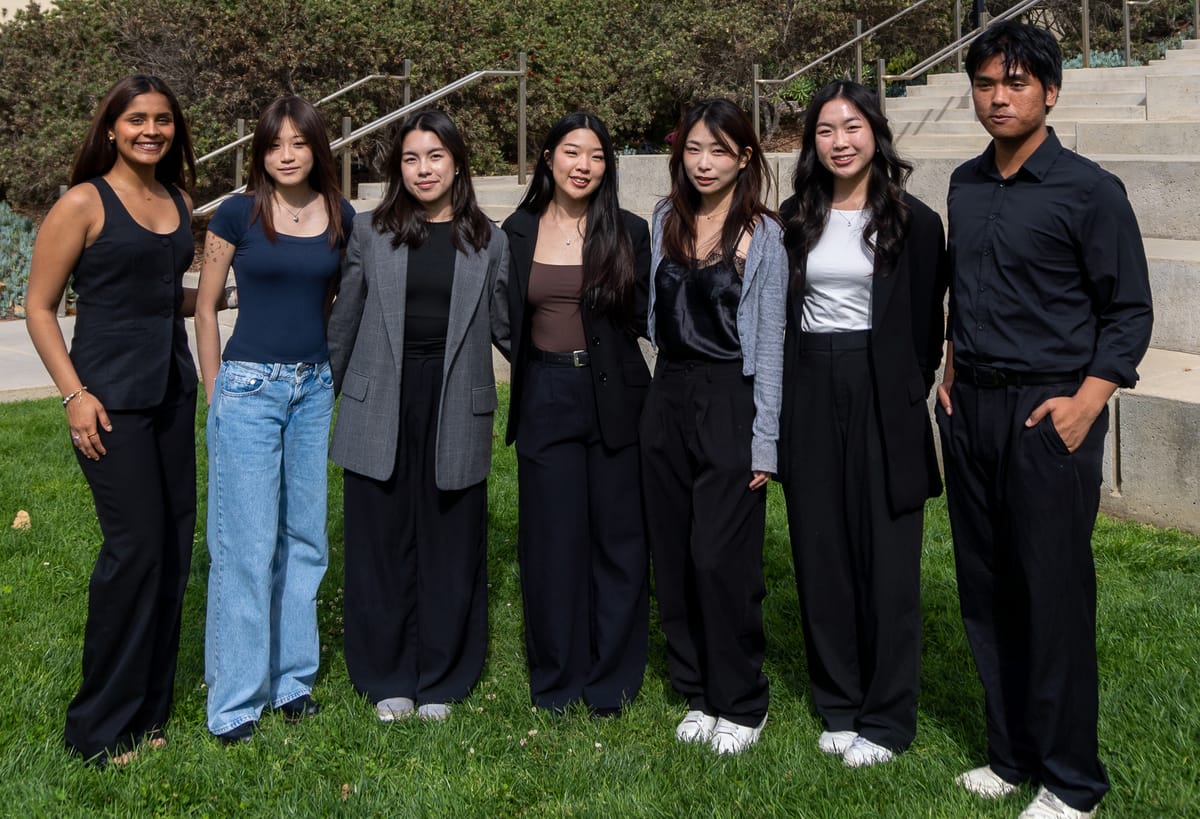


Designers
Interested in ideating from user research to high-fidelity screens? Apply to TSE's design team!
Applications are due on Sunday, October 11th at 11:59PM PDT.
- TSE applicants must be graduating Spring 2027 or after (meaning that you will be enrolled as an undergraduate at UCSD during winter and spring 2027).
- Because the goal for TEST applicants is to continue at TSE members next year, TEST applicants must be graduating Spring 2028 or after.
Our info session slides can be accessed here.
2026 Fall Recruitment Timeline
- Application opens - Week 0 Thursday 9/24 12:01am
- Application closes - Week 2 Sunday 10/11 11:59pm
- Phone screen invitation emails sent - Week 3 Friday 10/16
- Technical interview invitation emails sent - Week 5 Monday 10/26
- Acceptance/rejection emails sent - Week 6 Friday 11/6
Frequently Asked Questions
General
Triton Software Engineering (TSE) is a multidisciplinary student organization at UC San Diego. We partner with nonprofits to design and develop software, websites, and mobile applications pro-bono for social good, while giving our members practical, real-world experience.
If you are passionate about design or development and about helping others using the skills you learn in college, then TSE is the perfect place for you! We are all about social good, and we hope you share our passion. TSE offers a close network of like-minded students, and we can help you build skills that allow you to advance your career.
TSE recruits new members at the beginning of every Fall quarter.
There are three application stages for both designers and developers. We start with a resume screen, then a behavioral interview (with a few technical questions for aspiring TSE developers), followed by a final technical interview. For TEST, we have a resume screen, followed by a combined behavioral and technical interview.
The number of project teams in TSE depends on the number of nonprofits we are able to secure collaborations with every year. We usually have around 6 project teams, in addition to the TEST team. Each project team consists of an Engineering Manager, a Product Manager, a Design Lead, 7-9 developers, and 2-3 designers. Teams work independently of one another to create software for the nonprofit organization that they have been assigned to.
We host both internal and public events. Public events may include recruitment tabling, info sessions, intern panels, and more. To keep up to date with when these take place, follow us on Instagram.
After being a member for a year, you are invited to apply to our executive board positions through internal application processes. These opportunities include PVP (President and Vice Presidents), Engineering Managers, Product Managers, Design Leads, and more.
Developer
Here is the knowledge we expect for each grade level. Note that your grade level is determined by the year you entered college (e.g. if you started college in 2024, graduate in 2027, and are applying during the fall 2024 recruitment cycle, then you will be evaluated as a freshman). The interview questions might not cover all of these topics, and it might be possible to pass the interviews without knowing all of these topics, but our interview questions are designed with these expectations in mind.
First-years
Approximately CSE 8A or equivalent:
- Familiarity with at least one programming language
- Basic datatypes: booleans, integers, floating-point numbers, strings, arrays/lists
- Control flow structures: if/else statements, for/while loops
- Functions
- Unit testing concepts (no specific frameworks needed) and edge cases
Sophomores/Juniors/Seniors/Transfers
Approximately CSE 12 or equivalent:
- All of the topics for first-years, listed above
- Analyzing time and space complexity
- Recursion
- Data structures: multidimensional arrays/lists, dynamic arrays, stacks, queues, hash tables (also known as hash maps, dictionaries)
- Algorithms: sorting, binary search
In the behavioral interview, expect to do one or more of the following:
- Demonstrate your familiarity with the computer science concepts above
- Describe how you would test a piece of code
- Verbally explain a pseudocode solution to a small programming task
To prep for the technical interview:
- Brush up on a high-level programming language. Due to the nature of the interview tasks, some languages may be more difficult to use than others. Python or Java is preferred. You will not be able to compile or run your code, so exact syntax/APIs are not that important, but we expect you to demonstrate familiarity with the language you choose.
- Expect to solve one or more programming tasks, which may have multiple parts. Be mindful of edge cases, and discuss your approach with your interviewer before you start writing code.
- You will be evaluated on your communication and problem-solving skills, the readability, maintainability, and correctness of your code, and (for sophomores/juniors/seniors) the algorithmic performance of your code.
We emulate the Agile Workflow to give our developers some insight on industry standards. Developers complete weekly tasks assigned to them by their project manager during their team meetings. The work that you will be doing depends on your client. For most web development work, we tend to stick to the MERN stack, and for most cross-platform mobile development, we focus on using React Native with Expo. This means that, as a whole, TSE ends up with many JavaScript-based applications. However, depending on the client's needs, we may use other technologies, such as TypeScript, Go, and PostgreSQL. Typically, developers spend 4-6 hours a week on TSE activities.
Designer
While there is no set amount of experience or coursework we look for, we expect more familiarity with product design from juniors and seniors than freshmen and sophomores.
If you’re a first- or second-year, we look for applications that demonstrate evidence of creative problem-solving and collaboration in your past projects, as well as genuine curiosity about the field. Coursework like DSGN 1 is an example of the kind of content that's useful to know, but having taken the course is not a requirement in any way.
If you’re a third- or fourth-year, we're looking for a stronger sense of how you approach design work. A portfolio demonstrating your end-to-end design process is a great way to show us, though not a strict requirement. Courses like COGS 120, 125, or 127 are examples of content to know, but again, we do not screen for specific courses.
Be prepared to present a past project you worked on. The presentation will be a total of 25 minutes, with 15 minutes of presentation and 10 minutes of questions. It is recommended to have either slides or some sort of visual component to your presentation.
In addition, be prepared to solve a design challenge. You will be given a prompt similar to an actual TSE project and will have 30 minutes to demonstrate your ability to think through and solve this problem. You should be prepared to both talk through your thought process as well as convey your ideas through whiteboarding. We want to understand your thinking, so please feel free to talk out loud!
Designers work in teams of 3-4, collaborating closely with developers, team leads, and the nonprofit client to understand what the nonprofit needs and identify a tailored solution. From there, you'll move through research, ideation, wireframing, and prototyping in Figma, handing off to developers along the way and staying available as feasibility questions come up. Projects vary in scope, from website rebranding to internal software tools, providing a dynamic range of challenges. On average, designers dedicate 5-7 hours per week to TSE activities.
TEST
The TSE Early Start Training (TEST) program provides students a first step into exploring software engineering or UI/UX design. We look for students with limited to no prior experience and limited access to the resources that build exposure to these fields, alongside curiosity, genuine interest, and initiative. The program was founded to reach students who might not otherwise find a way into tech, and we especially encourage those from underprivileged backgrounds to apply.
TEST developers and designers will learn the fundamentals of their domain while working on beginner-level projects. The program lasts for the school year from late Fall through Spring. Afterwards, TEST members apply internally to become TSE developers and designers.
Because the goal is for TEST members to carry what they learn into TSE projects the following year, students graduating before Spring quarter of the next school year aren't eligible. You may apply to either TSE or the TEST program, not both. If you are unsure about which is right for you, please email triton.software.engineering@gmail.com.
The projects that TEST developers and designers work on vary every year. The topics adapt to each TEST cohort’s preferences as well as input from the TEST Design and Developer Lead. Past cohorts, for example, have designed and built Fulcrum which is the dashboard that still helps us manage recruitment today. The goal is that these projects will combine all the skills you learn throughout the year into something you can be proud of and add to your portfolio.
Yes! We have an internal process for transitioning TEST members into TSE roles, and our goal is for as many TEST members as possible to make that conversion. To be clear, TEST members are already part of TSE. You’re a member from day one with access to all that the club offers. The difference is the projects you work on, additional guidance you receive, and an additional evaluation TEST members can choose to undergo at the end of Spring quarter to take on TSE project work. This evaluation is just a check that you're ready for more advanced work, not a second application to join TSE.
As a TEST member, you will be spending the first portion of the year learning content through workshop sessions taught by our TEST Leads who have created customized curriculum to help you on your journey. You'll be collaborating with other TEST members during this entire process. After this first "bootcamp" period, you'll move onto the project portion of the year where you'll create something awesome using all of skills you picked up. Typically, TEST members spend 4-6 hours a week on TSE activities.
Still have questions?
If you still have any questions regarding how to get involved with us, please feel free to contact us at triton.software.engineering@gmail.com and we will get in touch with you as soon as possible.